Introduction
When you look up how to train, build muscle, and lose weight, you’ll often hear conventional wisdom like “count your calories,” “do this amount of reps,” or “train this way or that way.” Many of these statements, however, don’t hold as much truth as you might think. They are often based on a “looking at the trees, not the forest” approach. The same can be said for exercise selection, particularly when it comes to squats—especially the barbell back squat.
In the sections below, I’ll explain why I don’t recommend squatting, but first, I want to briefly share how I came to this conclusion. The key idea behind my argument is “intent.” What is the intention behind the movement, and how does it impact the body in relation to its environment?
Squatting: What’s the Big Deal?
Let’s first clarify what a squat is—and what it isn’t. In exercise, there are three main movement patterns for the lower body: the hinge pattern (lifting off the floor), the jump pattern (moving upward while staying upright), and cyclical upright movement (carrying, walking, and running). All lower body exercises relate to these three movement patterns, which are deeply embedded in our nervous system and serve clear purposes: lifting an object off the floor, moving yourself off the floor to a new position, and moving from point A to point B.
When you perform a squat, you’re utilizing the jump pattern. You maintain a semi-upright torso (depending on how you distribute the load), descend in a controlled manner, and either hold or bounce through the bottom position. The concentric (upward) portion is often performed rapidly. When you begin the downward motion, your knees cave in, creating internal torque. As your knees approach a 90-degree bend, they move outward, and when going upward, your knees cave in again before transitioning to an outward motion.
Generally, squats are hailed for their ability to build core strength, develop leg muscles, strengthen bones, and improve power output. And yes, these benefits are still valid. However, it’s essential to consider the long-term impacts.
Why Squats Can Be Problematic
On the surface, squats seem like a great exercise—a “big bang for your buck” type of movement that targets multiple muscles and challenges the body and mind. However, there’s one significant issue: how they alter your body.
Let’s zoom out and refocus on what we’re actually trying to achieve: a body that can support us and is fit to meet life’s demands. Our bodies, after all, are intention-based systems. They adapt based on intention, emotion, stress, and feedback.
Now, back to squats and their long-term function issues. If I were to throw you into the woods to survive for a year, I can promise you that you would never control your descent in an upright position and then rise up from the bottom with a load on your back. In nature, the load you handle is also never distributed away from the body; instead, it’s always close to our center of gravity.
So, why is externally loading the body a problem? When a load is distributed outside of the body, it alters how our torque chains fire, and through biomechanical levers, muscle contractions in the body change. This is why back squats, in particular, can cause issues like lower back pain, reduced tension in the pelvic floor (which can lead to erectile dysfunction), unstable knees, dysfunctional breathing patterns, and more.
Fundamentally, squats mess with our jumping movement pattern.
How Did I Get to This Point?
Some of you may be dismissing what I’ve said so far because I’m challenging the long-held belief that the squat is the “king” of all exercises. Let me give you some context.
I’ve been doing fitness regularly since I was 16. I hold a degree in Sport Science (CIOS) and several certifications, and I run a gym with my partner in Eltham, Australia.
When I started my fitness journey, my goal was simple: I wanted to be confident, look buff, and gain respect. Like most people, I made all the common mistakes, which led to mental struggles and injuries—things I’m trying to save you from. I’ve coached at CrossFit boxes, led boot camps, and worked at various gyms.
It’s true that I’ve always been a bit eccentric in my approach to exercise, but for the longest time, I did subscribe to the superiority of the barbell and machines. That all changed a few years ago.
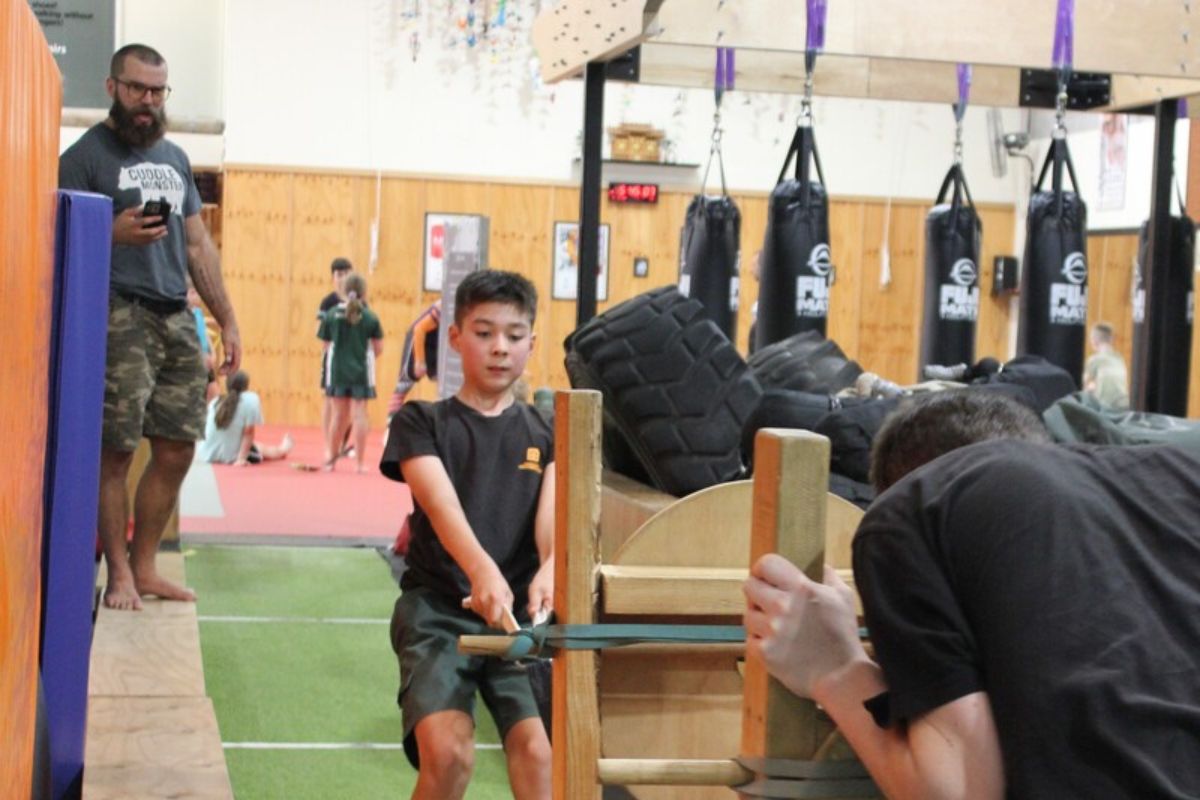
The biggest turning point in my fitness journey came when I started coaching kids. Kids have no preconceived notions about what exercise is supposed to look like. They are incredibly instinctive when it comes to movement—essentially the perfect source of fundamental movement.
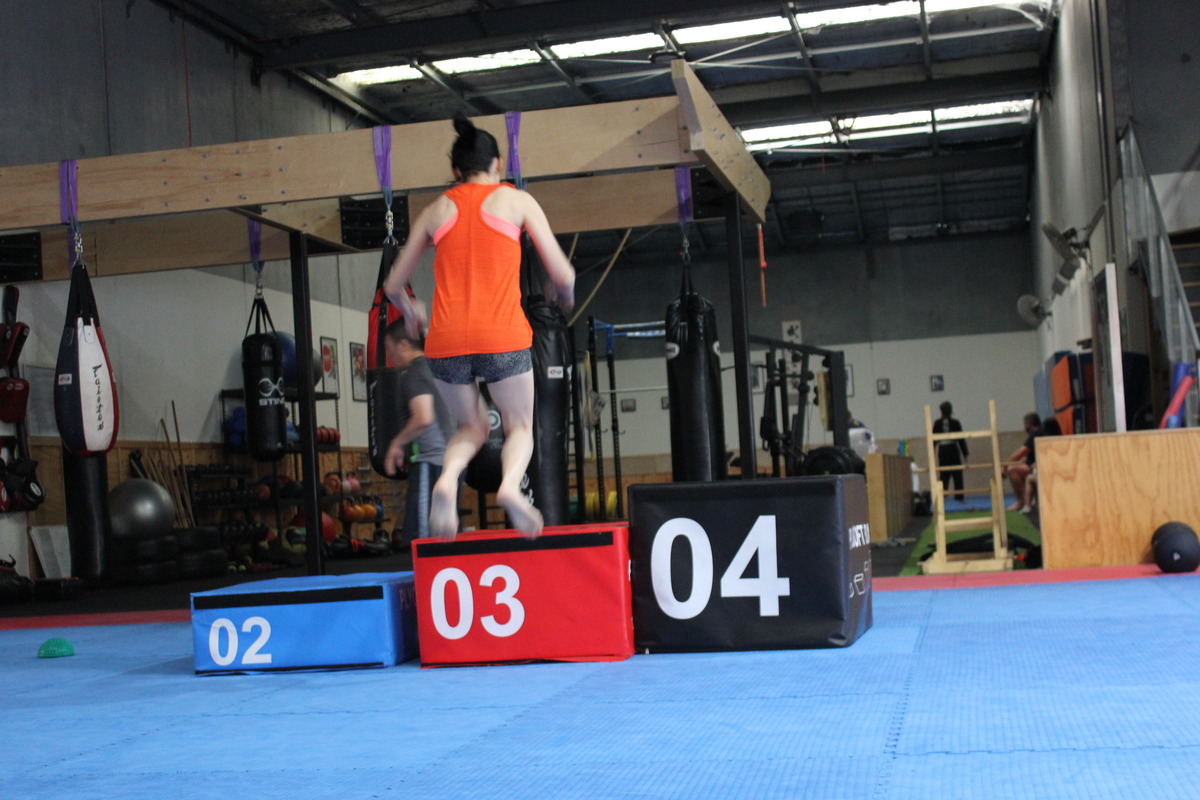
Telling kids to do squats gets you nowhere. They’ll mess up the movement, get bored, and won’t push themselves. Why? Because the movement doesn’t make sense to them. But give them a box to jump on, and everything changes. Now there is clear intent. And before you say, “They’re just kids; they don’t understand life like we do,” take a moment to reflect. Kids, in many ways, are often wiser than we are because they aren’t tainted by dogma.
The Real Goal of Functional Fitness
Let’s dive into what we’re truly trying to achieve with fitness. Today, many of us need to do additional training because our modern lifestyle isn’t physically demanding enough, leading to conditions like sarcopenia (muscle loss) and other health issues. In the past, cavemen, warriors, farmers, and tradesmen never needed to work out because their daily lives were physically taxing enough. Unfortunately, that’s not the case anymore.
Given this, it’s clear that we need to expose our bodies to the same demands that nature would place upon us. Think carrying loads, climbing, jumping, sprinting, fighting, striking, and throwing.
If we don’t embrace this approach, our bodies will become stiffer, our joints will take a beating, and we’ll lose the confidence that comes from having a truly functional body.
What to Do Instead
If you’ve made it this far, you probably already have an idea of the exercises I recommend instead of squats. But just to make it clear: Do movements that belong in a natural environment.
I personally recommend loaded carries, particularly the bear hug carry, with loads that are close to your center of gravity (like a stone, block of wood, or sandbag). This exercise is fantastic for combating the effects of sitting, forces your glutes to activate, and promotes proper posture by pulling the shoulder blades back. Because it’s a bipedal movement, it also improves symmetry. I also highly recommend sled pushes and drags, as they offer similar benefits without loading the spine horizontally.
Second, I recommend lifting heavy, awkward objects like sandbags, stones, kegs, and blocks of wood. This forces your grip to work overtime and helps protect your lower back. Why? Stronger glutes improve force production across the body. Another exercise I suggest is the triple extension, such as the sandbag or dumbbell clean and weight throw. This movement provides the same benefits as lifting but with the added advantage of improving power, metabolic conditioning, and neural capacity.
Third, jumping is a great addition to your routine. Jumping onto or toward an object not only mimics real-life scenarios but also strengthens bones, ligaments, tendons, and stabilizing muscles. It’s also great for neural output.
Finally, focus on getting off the floor. There are two movements I teach my clients: the getup (from lying on your back to standing) and the standup (from lying on your stomach to standing). These movements build real-world capacity, especially as you age, and improve core strength while addressing asymmetry.
When Squats Can Be Beneficial
Do I still squat? Yes, occasionally. I still do bodyweight squats, and once in a while, I might do a sandbag shoulder squat. But if I weren’t a coach and personal trainer, I wouldn’t squat at all because I’d need to be more efficient in my exercise selection.
Should you squat? If your goal is to build massive legs and achieve solid neural output, then sure, go for it. However, if you’re training for longevity, sports performance, or overall body comfort, I recommend focusing on exercises that are better suited for those goals.
Conclusion
Exercise is incredibly exciting because it’s your opportunity to upgrade your body and improve yourself. It’s your chance to live life fearlessly and age gracefully.
Most of us have busy lives and limited time for exercise, so choosing the right exercise for your intent is everything. Next time you’re in the gym, take a moment to reflect on what truly matters to you (e.g., family, career, success). Ask yourself if your training aligns with your intent and whether exercises like the chest press or leg extension machine are providing the true benefits you’re looking for.
So, What’s Next?
Has my blog made an impact on you? Great! Now what? If you’d like to see what I get up to, feel free to follow me on Instagram. If you’re not sure where to start with your exercise regime, consider contacting me or book a session.
Now get out there, and put in the work.